

Contents:
Choosing a women’s down jacket is not easy, especially considering how wide the assortment of such clothing is at FloveTouch. The collection includes many models in different styles and cuts. At the same time, purchasing winter outerwear is an investment in comfort: a high-quality coat or jacket protects against cold even in severe frost, highlights the advantages of the figure, and lasts for many years. The key is understanding how to choose the right quality down jacket. Below we share practical tips to help you decide before buying.

Key takeaways
- A properly selected insulation ensures comfort in any weather. When choosing insulation, pay attention to the percentage of down in the composition.
- The outer material of the down jacket is critically important: it affects protection from wind and moisture, and therefore your comfort in snow, rain, and frost.
- The fit of a coat or jacket depends on body type — choose a cut that highlights the strong points of your silhouette.
- The color of the down jacket matters: it should match your wardrobe and lifestyle.
How to choose a down jacket for cold winters: insulation as the “foundation” of warmth
When choosing a down jacket, the first thing to consider is the insulation. The classic option is natural down from waterfowl. It retains heat well while remaining lightweight. The optimal choice is a down-feather composition of about 70% down and 30% feathers: such clothing is warm, light, and soft. If the feather percentage is higher, the coat or jacket will be heavier. Therefore, when choosing a winter down jacket, always check the insulation composition on the label.
Another important parameter is Fill Power (volume/loft of the insulation). It shows how well the down “opens up” and restores volume after compression: the higher the value, the better. For urban winters, FP 550–700 is usually sufficient. For very cold winters (which are now less common), FP 700–900 can be considered.
How to choose a quality women’s down jacket: synthetic insulation as an alternative
In addition to natural down, synthetic insulation materials are used in down jackets. Their characteristics are close to down, and they are often more practical in wet weather. The most popular materials are:
- Thinsulate;
- Hollofiber;
- Isosoft;
- Synthetic down.
These options are usually hypoallergenic, do not require complicated care, and retain warmth even when wet. For convenience, let’s compare them by key parameters.
Table: insulation comparison
|
Characteristic |
Thinsulate |
Hollofiber |
Isosoft |
Synthetic down |
|
Fiber structure |
Ultra-thin microfibers (10–50 times thinner than human hair) |
Hollow spiral fibers |
Small fiber spheres |
Hollow siliconized fibers |
|
Main advantage |
Best warmth-to-thickness ratio, thin and very warm |
Elastic, holds shape, does not clump after washing |
Soft, lightweight, comfortable |
Affordable price, good value for money |
|
Hypoallergenic |
Yes |
Yes |
Yes |
Yes |
|
Moisture absorption |
Almost zero |
Very low |
Very low |
Low |
|
Elasticity and shape |
Holds shape well |
Excellent shape recovery |
Holds shape well |
May clump with low quality or improper washing |
|
Care (washing) |
Washable, retains properties |
Easy to wash, dries quickly |
Washable, restores volume well |
Washable, requires careful drying |

How to choose a winter down jacket: a few words about the outer material
The outer layer of a down jacket should protect against wind and moisture. Nylon and polyester, as well as their combination, have proven to be excellent choices. Polyester effectively repels moisture and blocks wind, while nylon is lightweight, durable, and allows excess moisture to escape.
The outer layer can also be made of natural fabrics (cotton, wool), but they are less resistant to wind and moisture, although they look very attractive. The choice between synthetic and natural fabrics largely depends on personal taste and climate conditions.
How to choose a down jacket by body type: useful tips
A down jacket is usually worn in cold seasons, so it should not only keep you warm but also highlight your body shape. First, determine your body type and consider the following recommendations:
- Apple. Avoid short and overly bulky models. Choose elongated styles of medium thickness.
- Hourglass. Proportional figure with a defined waist. Fitted models with a belt work best.
- Rectangle. Choose styles that add volume to the chest and hips.
- Pear. Cropped bombers or flared long coats are recommended.
- Inverted triangle. Avoid bulky collars and hoods. A-line models work well.
- Oval. Cocoon coats and loose fits look best.
Knowing how to choose a down jacket by body type helps you find a model that looks harmonious and feels comfortable.
How to choose the right size and color of a down jacket
The main rule of winter outerwear is that it should be slightly looser than a mid-season jacket. Try the down jacket on with the sweater or hoodie you plan to wear most often to ensure comfort.
During fitting, check freedom of movement: raise your arms, bring them together in front of your chest, hug yourself. If there is no tension in the back and the sleeves do not ride up too high, the size is correct. Also consider length: in cold weather, the jacket should cover the lower back and preferably the upper thighs.
Fasten all zippers and assess the fit — you should feel warm and comfortable. Size charts can help, but remember that they may vary between manufacturers. If in doubt between two sizes, it is usually safer to choose the slightly looser one.
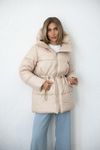
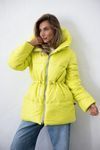
Color is also an important criterion. Classic shades (black, gray, green) are universal and practical. Light and pastel colors create a fresh look but require more care. Bright shades add individuality even on gloomy days.
When choosing the color of a down jacket, consider:
- Your wardrobe palette. Think about what you will wear it with.
- Practicality. In rainy regions, light colors require more frequent cleaning.
Conclusions
When choosing a down jacket, pay attention to the insulation, outer material, body type, as well as correct size and color selection. Knowing how to choose a good down jacket ensures comfort, warmth, and style throughout winter. Happy shopping and a warm winter!